A new search method has identified a hard-to-find pulsar in public NASA data, and NASA says the main advance is speed: the analysis found the signal using the equivalent of about 10 hours on a standard processor, compared with an earlier approach that still failed after work NASA says would amount to roughly 600 years on one processor.
The object is PSR J1622−7204, which NASA describes as an isolated pulsar spinning 261 times per second. NASA says a paper describing the result was published in Physical Review Letters.
How the search worked
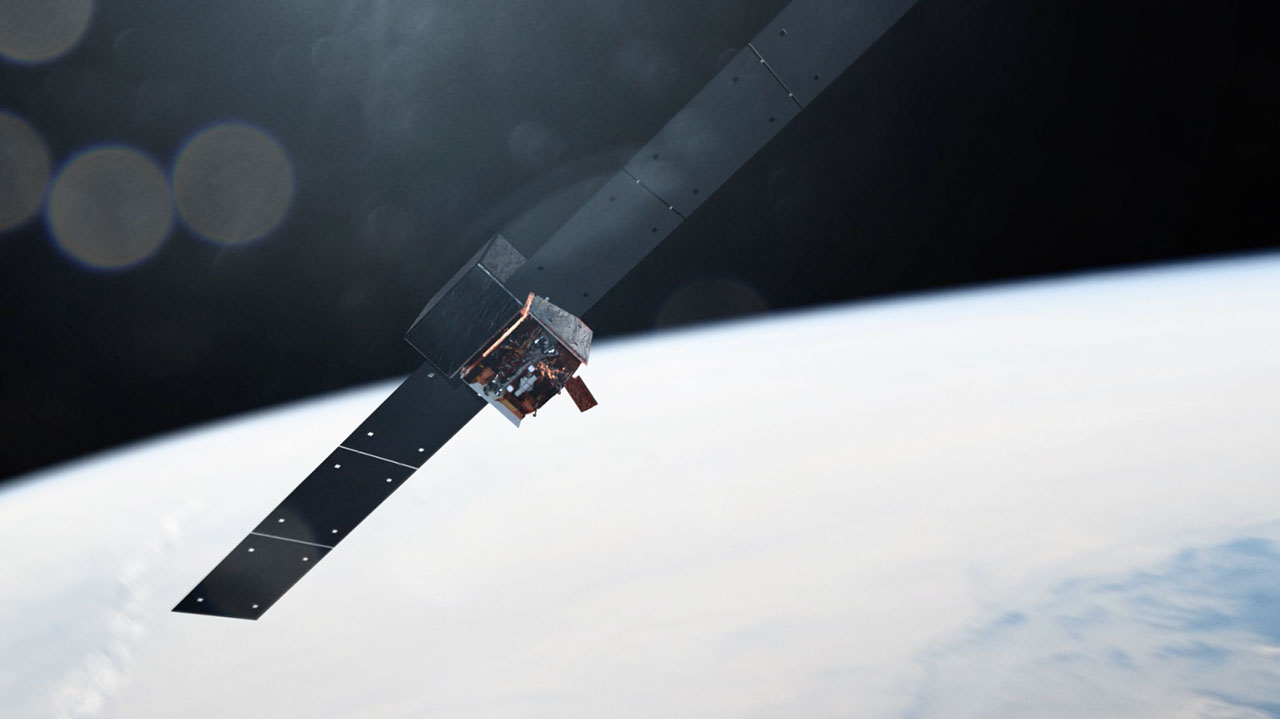
NASA says the team analyzed 15 years of observations from the Fermi Gamma-ray Space Telescope. Pulsars can be difficult to pick out in gamma-ray data because Fermi detects only a small number of photons from any one source, mixed with background gamma-ray noise. To identify a pulsar, researchers must search across several unknowns at once, including spin rate, how the spin changes, and the source’s exact position in the sky.
According to NASA, the new approach came from study co-authors Dotan Gazith and Barak Zackay of the Weizmann Institute of Science in Israel, who recast that search as a geometry problem involving the shortest vector in a high-dimensional lattice. NASA says those lattice algorithms were originally developed in cryptography research and have also been used in satellite navigation.
Each trial run took about five minutes on a single computer core, NASA says. After the algorithm flagged a candidate, the researchers checked it against the full Fermi dataset and found a signal NASA says was too strong to be explained by chance.
What the evidence supports
The result shows that this method could recover at least one pulsar that previous searches missed under far heavier computing demands. NASA says earlier searches often relied on breaking Fermi data into smaller pieces and distributing the work through volunteer computing, with single discoveries typically taking the equivalent of hundreds of computer-years.
NASA also links the work to open data access. Fermi launched in 2008, surveys the full sky every three hours, and, after a one-year calibration period, its data became fully public, NASA says. The agency says outside researchers were able to apply this new analysis because those data, along with software such as Fermitools, are openly available. NASA additionally says 18 years of Fermi data have now been made public overall.
Limits and the next question
NASA says the team’s next target is pulsars in binary systems, where a companion star distorts the signal and has made them much harder to detect with traditional techniques.
According to NASA, co-author Colin Clark said there are probably tens or perhaps hundreds of such pulsars in the dataset that researchers have not yet been able to find. That remains an expectation rather than a confirmed count. NASA says the team hopes to combine the new algorithm with volunteer computing through Einstein@Home to extend the search.