A study published November 16 in Proceedings of the National Academy of Sciences, as described by SciTechDaily, suggests that the size of sand grains in dunes may preserve a clue to how hard the wind was blowing when those dunes formed — not only on Earth, but potentially on Mars as well.
The central finding is not simply that stronger winds can move larger grains. According to SciTechDaily’s account of the paper, the researchers found that the winds doing most of the work of building dunes were generally just above the minimum wind strength needed to start sand moving along the ground. In their analysis, that characteristic wind speed was closely tied to the median grain size of the dune sand.
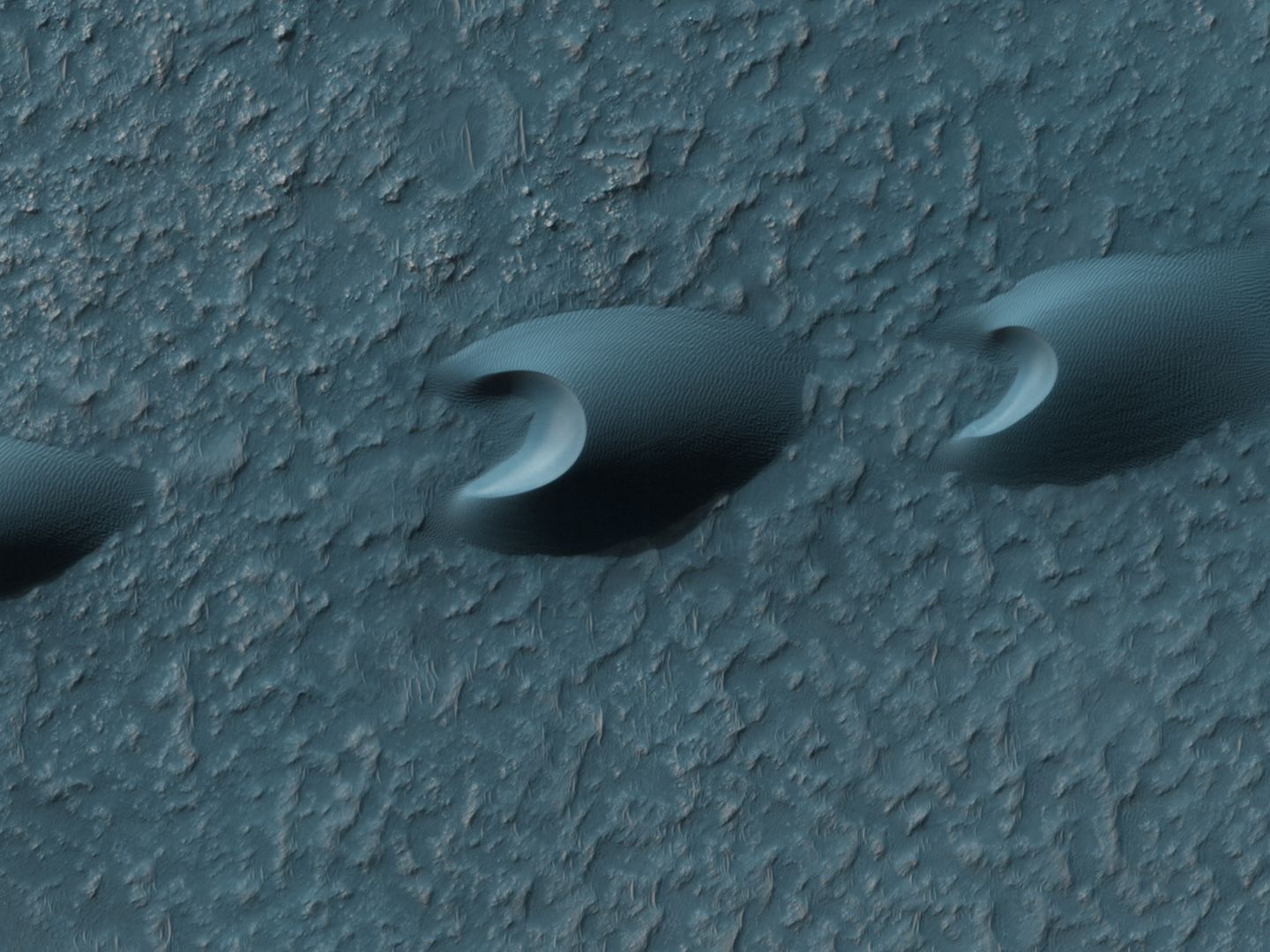
That matters because windblown dunes are common across the solar system, including on Mars, Venus, Titan and even a comet, but wind speed has been harder to reconstruct than wind direction or pattern. If grain size reliably reflects the winds that transported the sediment, preserved dune deposits could offer a way to estimate ancient atmospheric conditions.
The team, led by researchers at Stanford University, tested the idea using 30 years of wind observations and grain-size measurements from 24 dune fields around the world, SciTechDaily reported. Those sites included environments such as Coral Pink Sand Dunes State Park in Utah and dune landscapes in Namibia. For each field, the researchers calculated which wind speed moved the greatest amount of sand over time. Across the 24 sites, SciTechDaily says, that speed stayed only modestly above the transport threshold and tracked grain size closely.
According to the same report, the researchers then looked at measurements from one Martian dune field and found a similar relationship there. The article says this pattern appeared despite large differences between Earth and Mars in atmospheric pressure, gravity and sediment density.
What the evidence supports, based on SciTechDaily’s summary, is a cross-planetary possibility rather than a broad proof for every world with dunes. The researchers say the same basic process may apply where loose sediment is plentiful and stronger winds become less common as speeds increase.
They also argue that this could help reconstruct older climates from sedimentary rocks. SciTechDaily attributes to senior author Mathieu Lapôtre, of the Stanford Doerr School of Sustainability, the claim that the method may work for both modern dunes and sandstones dating back three billion years.
SciTechDaily also reported that the work is already moving toward applications in ancient climate reconstruction. The article attributes to Lapôtre the view that the relationship could be used to investigate the atmospheric histories of Earth and Mars, and says Colin Marvin is already working on those next steps.
The study was supported by a National Science Foundation CAREER grant, according to SciTechDaily.